
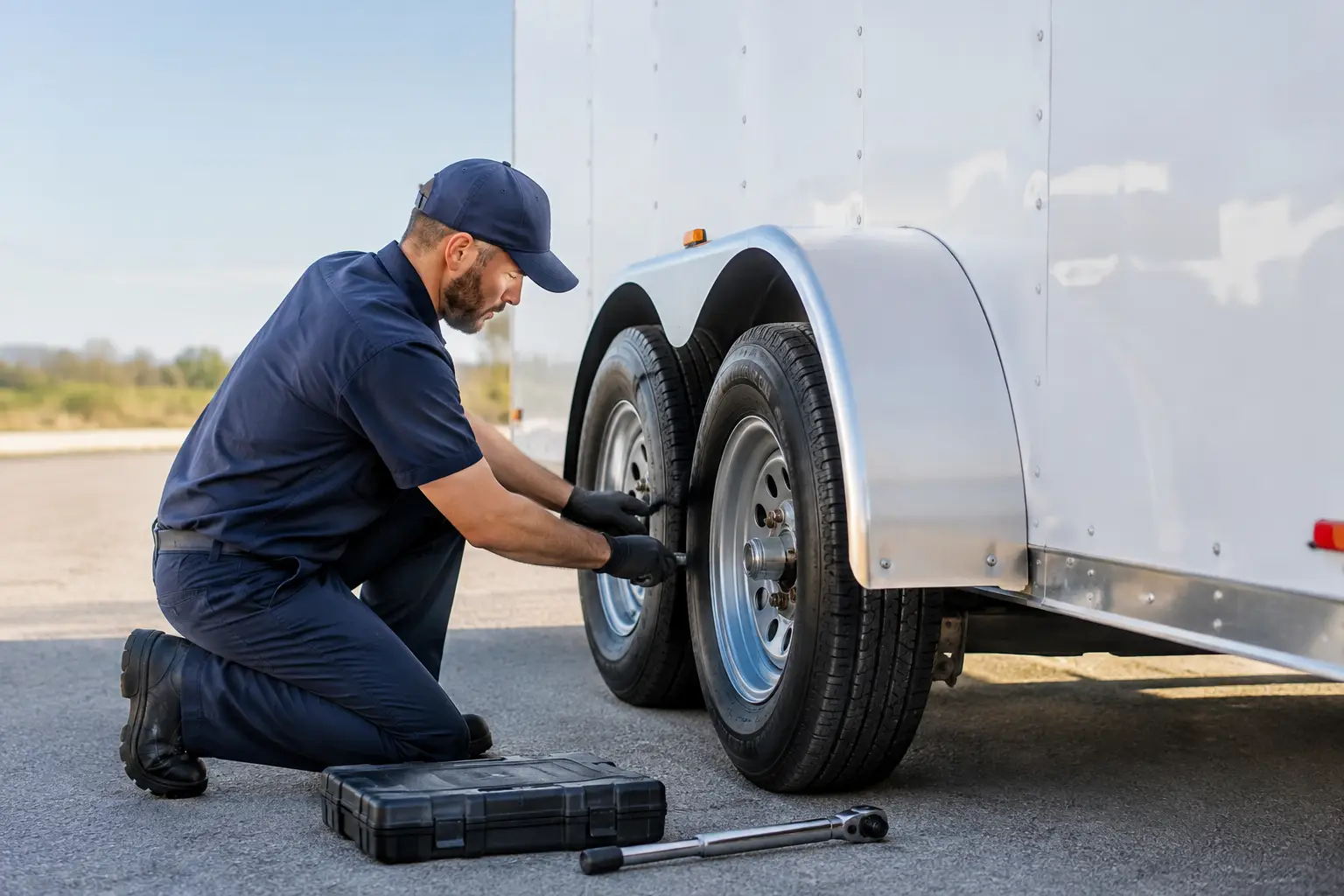
A trailer failure does not have to turn into an all-day towing problem. Mobile trailer repair brings the technician, tools, and replacement parts to your yard, jobsite, terminal, or roadside location so you can address the issue where the equipment sits. For New York trucking operations, that can mean the difference between a delayed load and a recoverable service stop.
A trailer may look simple compared with the tractor, but it carries the load, absorbs road damage, and has to meet safety requirements every mile. A lighting fault, air leak, damaged landing gear, brake issue, or broken door can put equipment out of service fast. The right response is not guessing at a quick fix. It is getting a qualified heavy-duty technician on site to identify the problem, explain the repair, and get the trailer road-ready.
Why Mobile Trailer Repair Matters to Fleet Operations
When a trailer is disabled, the cost is rarely limited to the repair invoice. Drivers lose productive time. Dispatch has to reshuffle pickups or deliveries. Freight may need to be transferred. A tow to a repair shop adds expense and can leave the equipment waiting in line before work even begins.
On-site repair cuts out much of that avoidable delay. Instead of moving a damaged trailer to the technician, the technician comes to the trailer. This is especially valuable when the unit is loaded, parked at a customer site, blocked into a crowded yard, or unable to move safely under its own power.
For owner-operators, mobile service protects the next run and reduces the disruption of an unexpected breakdown. For fleet managers, it gives the operation a practical way to manage equipment problems without pulling multiple people away from dispatch, loading, or customer communication. The goal is straightforward: repair what can be safely repaired on site, document what needs further attention, and return equipment to service without unnecessary downtime.
Common Trailer Problems That Can Be Repaired On Site
Not every trailer repair belongs on the roadside or in a parking lot. Major collision damage, structural work, and certain complex repairs may require a shop environment. But a capable mobile technician can resolve many of the failures that commonly stop commercial trailers from operating.
Air System and Brake Concerns
Air leaks are one of the most common reasons a trailer cannot move. A leaking hose, damaged fitting, failing gladhand seal, or issue with an air valve can affect brake performance and create an immediate safety concern. The technician needs to locate the actual leak, not just replace the nearest part and hope the problem is gone.
Brake-related service may also include checking chambers, slack adjusters, lines, connections, and visible component damage. If a repair can be completed safely on site, mobile service can prevent a small air-system issue from becoming a tow and a missed appointment. If the inspection shows a larger brake problem, the operator gets a clear recommendation before putting the unit back on the road.
Lights, Wiring, and Electrical Faults
A trailer with inoperative brake lights, turn signals, clearance lights, or marker lights can be sidelined during an inspection or create a serious risk after dark. Electrical problems are often caused by corroded connectors, damaged harnesses, poor grounds, broken wires, or failed lamps. They can also originate at the tractor-trailer connection, which is why proper diagnosis matters.
Mobile technicians can test circuits, inspect plugs and wiring, replace damaged components, and confirm that required lights are working before the trailer leaves the location. That is a more dependable approach than repeatedly changing bulbs when the real issue is a wiring or ground failure.
Landing Gear, Doors, and Body Hardware
A trailer that cannot be safely coupled, uncoupled, opened, or secured creates a loading problem immediately. Bent handles, stripped landing gear components, damaged crank assemblies, broken hinges, latch failures, and door hardware issues can keep freight from moving even when the tractor is ready.
These repairs matter because they affect both productivity and safety around the trailer. A driver should not have to force damaged landing gear or improvise around a door that will not latch. On-site trailer service can address many hardware failures before they create damage to freight, equipment, or people in the work area.
Tires, Wheels, and Suspension Damage
A flat tire or wheel-end concern can stop a trailer just as effectively as a mechanical failure. Mobile service may be appropriate for certain tire-related issues, visible suspension damage, loose or damaged components, and inspections after a road hazard. The correct next step depends on the condition of the equipment and whether it can be safely returned to service.
This is where experience matters. A temporary-looking issue can point to a larger cause, such as contact damage, a failed component, or an alignment concern that will destroy another tire. A technician who looks beyond the immediate symptom helps reduce repeat breakdowns.
What to Expect From a Mobile Trailer Repair Call
A productive service call starts with good information. When calling for help, provide the trailer type, location, unit number, visible symptoms, whether it is loaded, and whether it is safe to approach or move. Photos can be useful when available, but they do not replace an on-site inspection.
Once the technician arrives, the work should begin with an assessment of the condition and the safety risk. The repair plan may be simple, such as replacing an air fitting or repairing a light circuit. It may also reveal that the trailer needs a shop repair before it can operate safely. Honest communication is essential in both cases.
The best mobile repair service does not promise that every problem has a roadside answer. It provides a clear diagnosis, practical options, and professional workmanship. When parts are needed, quality components and correct installation help avoid the frustration of a repeat failure on the next load.
When to Call for Mobile Trailer Repair Instead of Waiting
Waiting can be costly when the trailer is already affecting a shipment, driver hours, or a jobsite schedule. Call for mobile service when an air leak, brake concern, lighting failure, landing gear issue, door problem, or other defect is preventing safe operation. It is also a smart choice when moving the trailer to a shop would require a tow or create more disruption than an on-site repair.
Mobile repair is useful for scheduled work as well. A fleet can arrange trailer inspections, lighting repairs, minor air-system service, and hardware repairs during downtime at its own location. Planned service gives managers more control over the work instead of waiting for a failure to dictate the schedule.
For fleets running through Brentwood, Suffolk County, Nassau County, and nearby areas, local response also matters. A technician familiar with commercial equipment and the demands of regional freight operations can get to the point faster than a general repair provider who is not set up for heavy-duty work.
Preventing the Next Trailer Breakdown
Emergency repairs keep freight moving, but preventive attention helps keep emergencies from repeating. Drivers should report slow air leaks, flickering lights, stiff landing gear, loose door hardware, unusual tire wear, and brake concerns as soon as they appear. Small defects are easier to schedule and usually less expensive to correct before they become a roadside failure.
Fleet managers can support that effort by making trailer checks part of the operating routine. Pre-trip and post-trip inspections should not be treated as paperwork. They are the best opportunity to catch damage before a trailer is loaded, dispatched, or stopped at an inspection point.
Pay close attention to equipment that changes hands often or works in demanding conditions. Construction trailers, delivery units, high-cycle dry vans, and equipment used around docks can take repeated abuse. Their service needs may be more frequent than a calendar-based maintenance interval suggests.
Fleet Command LLC provides heavy-duty mobile service with the focus commercial operators need: direct communication, professional repairs, and practical support when equipment cannot wait. Whether the trailer is sitting at a customer location or holding up a planned departure, getting a technician to the unit quickly can protect the schedule and keep the operation moving.
When a trailer issue appears, address it before the next load turns a small defect into a missed commitment. The fastest path back to productive service is usually a clear diagnosis, the right repair, and a technician who can meet the equipment where it is.