
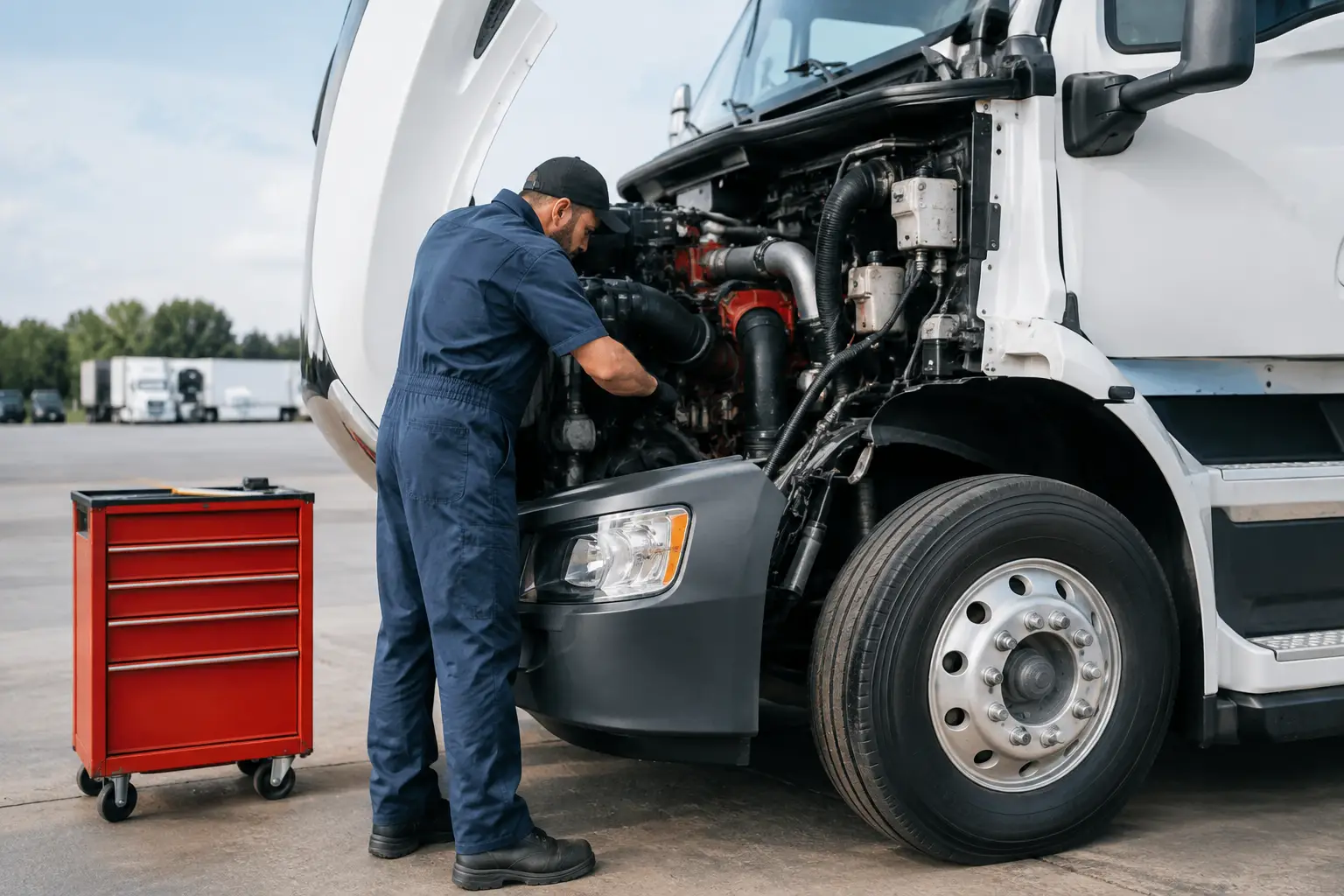
A diesel mechanic is not just the person you call when a truck will not start. For an owner-operator or fleet manager, the right heavy-duty technician protects delivery schedules, driver time, customer commitments, and revenue. When a semi-truck, trailer, or work vehicle is down in Brentwood, Suffolk County, Nassau County, or a nearby service area, every hour off the road can create a larger operational problem.
Heavy-duty equipment needs heavy-duty experience. Commercial trucks work under loads, mileage, traffic, weather, and deadlines that a general automotive repair shop is not built to handle. Accurate diagnostics, quality parts, and a repair plan that addresses the actual failure matter because a quick patch that fails again next week is not a cost-saving solution.
What a Diesel Mechanic Handles on Commercial Equipment
A qualified diesel mechanic works on the systems that keep commercial vehicles safe, legal, and productive. That can mean troubleshooting an engine fault code, tracking down a no-start condition, repairing air brake issues, servicing a trailer, or diagnosing a transmission problem before it turns into a complete failure.
Modern diesel trucks require more than basic wrench work. Electronic control modules, emissions components, sensors, fuel systems, and aftertreatment systems all affect how a truck runs. A warning light may point to one component, while the real cause is a wiring issue, low fluid pressure, contamination, or a related system failure. Proper diagnostics prevent unnecessary parts replacement and help get the repair right the first time.
On the mechanical side, a heavy-duty technician may address cooling system leaks, belts and hoses, wheel-end concerns, suspension wear, air system leaks, electrical faults, starter and alternator issues, and exhaust problems. Trailer repairs are equally important. A damaged light circuit, brake issue, tire concern, landing gear problem, or broken door hardware can sideline a load just as effectively as an engine failure.
The work changes based on the vehicle, its duty cycle, and the symptoms. A local delivery truck that makes frequent stops has different wear patterns than a highway tractor pulling long-distance freight. A contractor’s work truck may face idle time, jobsite dust, and heavy PTO use. A capable mechanic accounts for how the equipment is actually used, not simply what the manual says should be happening.
Why Mobile Diesel Mechanic Service Reduces Downtime
Towing a disabled commercial vehicle to a shop is often only the first delay. The vehicle may need to wait for a bay, wait for an initial inspection, and then wait again for authorization or parts. That process can make sense for a major rebuild or a repair that requires shop equipment, but it is not always the fastest answer.
Mobile heavy-duty road service brings diagnostic and repair capability directly to the truck, trailer, yard, jobsite, or roadside location. For many breakdowns, that removes the towing step and gets a technician working sooner. If the issue can be repaired safely on-site, the vehicle may return to service without ever leaving its location.
Mobile service is especially valuable for problems such as no-starts, battery and charging issues, air leaks, electrical faults, cooling system failures, fuel delivery concerns, minor brake repairs, and trailer defects. It also supports planned maintenance at a fleet yard, where several units can be inspected or serviced without sending drivers across town and taking equipment out of rotation longer than necessary.
There are limits, and an honest mechanic will say so. Transmission rebuilding, internal engine work, extensive structural damage, and repairs requiring specialized lifting or machining may belong in a properly equipped shop. The goal is not to force every repair into a roadside setting. The goal is to make the right call quickly, stabilize the situation, and avoid unnecessary downtime.
The Difference Between a Repair and a Diagnosis
The visible symptom is rarely the whole story. A truck losing power may have a fuel issue, a turbocharger problem, a sensor failure, an intake leak, a clogged filter, or an aftertreatment concern. Replacing parts based on a guess costs money and can leave the truck in the same condition.
Professional engine and transmission diagnostics start with the driver’s report, fault codes, visual inspection, system testing, and operating conditions. Details matter. Did the problem occur under load? Did it happen after fueling? Is the issue intermittent? Did a warning light appear before the derate? A driver who shares clear symptoms gives the technician a better starting point, while the technician should explain what was found and why a specific repair is recommended.
That communication matters for fleet decisions. A fleet manager needs to know whether a truck can complete a route, whether it should be removed from service, what parts are needed, and what the likely timeline looks like. Clear answers allow dispatchers and customers to plan around the repair instead of being left with a vague promise that someone is working on it.
Preventive Maintenance Is an Uptime Strategy
Emergency repairs cannot always be avoided. Road debris, sudden component failures, and electrical problems happen. Still, many expensive breakdowns start as smaller issues that were missed during routine service.
Preventive maintenance gives a diesel mechanic the chance to find leaks, worn belts, loose connections, tire issues, contaminated fluids, brake wear, cooling problems, and developing fault codes before they interrupt a load. It also creates a service history that makes future diagnosis faster. When technicians know what was recently repaired, replaced, or flagged for monitoring, they can narrow down a problem without starting from zero.
A useful maintenance schedule should follow the manufacturer’s requirements, but it should also reflect real operating conditions. Stop-and-go routes, extended idling, heavy loads, short trips, winter operation, and dusty jobsites can all call for more frequent attention. A truck that rarely leaves the yard can still develop problems from low battery charge, fluid leaks, tire deterioration, or neglected inspection items.
For fleet operators, scheduled service should be built around availability. Maintenance done during planned off-hours or at the yard is easier to manage than a breakdown in the middle of a delivery window. It may not eliminate every roadside call, but it gives the operation more control over when equipment is out of service.
What to Expect From a Dependable Heavy-Duty Repair Partner
Speed matters when equipment is down, but speed without accountability creates repeat problems. Look for a service provider that responds promptly, asks the right questions before dispatch, and arrives prepared to diagnose rather than guess. The technician should communicate the condition of the vehicle, explain the recommended repair in plain terms, and be direct about whether the truck can safely move.
Pricing should also be transparent. Commercial operators understand that heavy-duty repairs involve labor, diagnostics, parts, and sometimes unexpected findings. What they should not have to deal with is unclear authorization, unexplained charges, or a repair recommendation with no supporting diagnosis. Fair service means being clear about the work, the urgency, and the available options.
Quality parts are part of that equation. The lowest-cost component is not always the best value when failure could cost a day of revenue, a missed appointment, or another service call. In some situations, an aftermarket part is appropriate. In others, OEM or premium-grade components may make more sense. The right choice depends on the repair, the truck’s application, and the operator’s plans for the vehicle.
Fleet Command LLC provides mobile heavy-duty repair, emergency road service, diagnostics, trailer work, and preventive maintenance for commercial operators who need dependable support where their equipment is located. Whether the issue is urgent or part of a scheduled service plan, the priority remains the same: make a sound repair and keep the operation moving.
A truck does not need to be completely disabled before it deserves attention. A new vibration, slow crank, air loss, warning light, fluid spot, shifting change, or trailer lighting issue is easier to address before it becomes a roadside shutdown. Getting a qualified technician involved early gives your drivers, dispatchers, and customers a better chance of having an ordinary workday instead of an expensive recovery day.